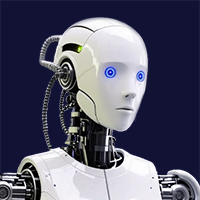
AI is consuming staggering amounts of energy—already over 10% of U.S. electricity—and the demand is only accelerating. Now, researchers have unveiled a radically more efficient approach that could slash AI energy use by up to 100× while actually improving accuracy. By combining neural networks with human-like symbolic reasoning, their system helps robots think more logically instead of relying on brute-force trial and error.
By Michael Santora, CEO at Logic Robotics Cities across the globe are wrestling with a stubborn challenge: congestion. While traffic often comes to mind first, logistics experts point out that the real bottleneck in many urban environments lies at the curb. Trucks not only clog intersections as they navigate narrow streets, but also occupy scarce […]
A new tomato-picking robot is learning to think before it acts. Instead of simply identifying ripe fruit, it predicts how easy each tomato will be to harvest and adjusts its approach accordingly. This smarter strategy boosted success rates to 81%, with the robot even switching angles when needed. The breakthrough could pave the way for farms where robots and humans work side by side.
A new study put ChatGPT to the test by asking it to judge whether hundreds of scientific hypotheses were true or false—and the results were far from reassuring. While the AI got it right about 80% of the time on the surface, its performance dropped significantly when accounting for random guessing, revealing only modest reasoning ability. Even more concerning, it frequently contradicted itself when asked the exact same question multiple times, sometimes flipping answers back and forth.
Scientists warn that rapid advances in AI and neurotechnology are outpacing our understanding of consciousness, creating serious ethical risks. New research argues that developing scientific tests for awareness could transform medicine, animal welfare, law, and AI development. But identifying consciousness in machines, brain organoids, or patients could also force society to rethink responsibility, rights, and moral boundaries. The question of what it means to be conscious has never been more urgent—or more unsettling.
A massive new study comparing more than 100,000 people with today’s most advanced AI systems delivers a surprising result: generative AI can now beat the average human on certain creativity tests. Models like GPT-4 showed strong performance on tasks designed to measure original thinking and idea generation, sometimes outperforming typical human responses. But there’s a clear ceiling. The most creative humans — especially the top 10% — still leave AI well behind, particularly on richer creative work like poetry and storytelling.
Researchers have created microscopic robots so small they’re barely visible, yet smart enough to sense, decide, and move completely on their own. Powered by light and equipped with tiny computers, the robots swim by manipulating electric fields rather than using moving parts. They can detect temperature changes, follow programmed paths, and even work together in groups. The breakthrough marks the first truly autonomous robots at this microscopic scale.
Chimps may revise their beliefs in surprisingly human-like ways. Experiments showed they switched choices when presented with stronger clues, demonstrating flexible reasoning. Computational modeling confirmed these decisions weren’t just instinct. The findings could influence how we think about learning in both children and AI.