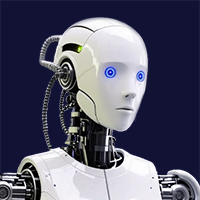
A new study put ChatGPT to the test by asking it to judge whether hundreds of scientific hypotheses were true or false—and the results were far from reassuring. While the AI got it right about 80% of the time on the surface, its performance dropped significantly when accounting for random guessing, revealing only modest reasoning ability. Even more concerning, it frequently contradicted itself when asked the exact same question multiple times, sometimes flipping answers back and forth.
As AI systems began acing traditional tests, researchers realized those benchmarks were no longer tough enough. In response, nearly 1,000 experts created Humanity’s Last Exam, a massive 2,500-question challenge covering highly specialized topics across many fields. The exam was engineered so that any question solvable by current AI models was removed. Early results show even the most advanced systems still struggle — revealing a surprisingly large gap between AI performance and true expert-level knowledge.
As millions turn to ChatGPT and other AI chatbots for therapy-style advice, new research from Brown University raises a serious red flag: even when instructed to act like trained therapists, these systems routinely break core ethical standards of mental health care. In side-by-side evaluations with peer counselors and licensed psychologists, researchers uncovered 15 distinct ethical risks — from mishandling crisis situations and reinforcing harmful beliefs to showing biased responses and offering “deceptive empathy” that mimics care without real understanding.
Neuromorphic computers modeled after the human brain can now solve the complex equations behind physics simulations — something once thought possible only with energy-hungry supercomputers. The breakthrough could lead to powerful, low-energy supercomputers while revealing new secrets about how our brains process information.
Foams were once thought to behave like glass, with bubbles frozen in place at the microscopic level. But new simulations reveal that foam bubbles are always shifting, even while the foam keeps its overall shape. Remarkably, this restless motion follows the same math used to train artificial intelligence. The finding hints that learning-like behavior may be a fundamental principle shared by materials, machines, and living cells.
Spanish researchers have created a powerful new open-source tool that helps uncover the hidden genetic networks driving cancer. Called RNACOREX, the software can analyze thousands of molecular interactions at once, revealing how genes communicate inside tumors and how those signals relate to patient survival. Tested across 13 different cancer types using international data, the tool matches the predictive power of advanced AI systems—while offering something rare in modern analytics: clear, interpretable explanations that help scientists understand why tumors behave the way they do.
BISC is an ultra-thin neural implant that creates a high-bandwidth wireless link between the brain and computers. Its tiny single-chip design packs tens of thousands of electrodes and supports advanced AI models for decoding movement, perception, and intent. Initial clinical work shows it can be inserted through a small opening in the skull and remain stable while capturing detailed neural activity. The technology could reshape treatments for epilepsy, paralysis, and blindness.
Princeton researchers found that the brain excels at learning because it reuses modular “cognitive blocks” across many tasks. Monkeys switching between visual categorization challenges revealed that the prefrontal cortex assembles these blocks like Legos to create new behaviors. This flexibility explains why humans learn quickly while AI models often forget old skills. The insights may help build better AI and new clinical treatments for impaired cognitive adaptability.
A powerful new AI tool called Diag2Diag is revolutionizing fusion research by filling in missing plasma data with synthetic yet highly detailed information. Developed by Princeton scientists and international collaborators, this system uses sensor input to predict readings other diagnostics can’t capture, especially in the crucial plasma edge region where stability determines performance. By reducing reliance on bulky hardware, it promises to make future fusion reactors more compact, affordable, and reliable.
AI-powered analysis of routine blood tests can reveal hidden patterns that predict recovery and survival after spinal cord injuries. This breakthrough could make life-saving predictions affordable and accessible in hospitals worldwide.
Scientists at Mount Sinai have created an artificial intelligence system that can predict how likely rare genetic mutations are to actually cause disease. By combining machine learning with millions of electronic health records and routine lab tests like cholesterol or kidney function, the system produces "ML penetrance" scores that place genetic risk on a spectrum rather than a simple yes/no. Some variants once thought dangerous showed little real-world impact, while others previously labeled uncertain revealed strong disease links.