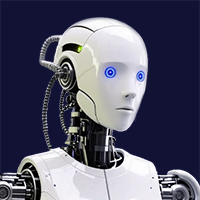
Epson Robots has announced a strategic alliance with Clayton Controls to deliver advanced automation solutions to the Southwest US region. “Our business philosophy is to understand our customers’ unique challenges and develop automated solutions that will increase productivity with our knowledge, experience and an extensive product portfolio to meet those needs,” said Chris Brown, vice […]
A recent survey shows over 70 percent of truck techs now use AI-powered diagnostics every week, proving the shift is already here. Modern trucks rely on sensors, connected systems, and smart alerts that demand sharper digital skills. Techs who blend mechanical experience with data confidence quickly gain an edge in fast-changing shops. In this article, […]
A guy spent $22,000 on a steel mold. Parts came back warped. The wall thickness was wrong. The factory said it was his design. He said it was their fault. Six months later, still no product. That story is not rare. It happens constantly to founders and engineers who skip the basics of injection molding. […]
Choosing the right project management tools can either make or break teams. Choosing among this number of options needs to be done wisely. Good tools assist in organizing tasks, maintaining clear communication, and tracking challenges and progress. Knowing what to look for helps teams make decisions that foster productivity and collaboration. Identify Team Needs Start […]
Robotics teams rarely struggle because a part cannot be printed at all. More often, they lose time because a part arrives with the wrong material, the wrong orientation, a missed drawing note, or small inconsistencies that only become obvious during assembly or testing. That is why speed alone is not enough. For robotics teams, a […]
AI’s growing energy use sounds alarming, but its global climate impact may be far smaller than expected. Researchers found that while AI consumes huge amounts of electricity, it barely moves the needle on overall emissions. The real impact is more localized, especially around data centers. Meanwhile, AI could become a powerful tool for building greener technologies.
A new tomato-picking robot is learning to think before it acts. Instead of simply identifying ripe fruit, it predicts how easy each tomato will be to harvest and adjusts its approach accordingly. This smarter strategy boosted success rates to 81%, with the robot even switching angles when needed. The breakthrough could pave the way for farms where robots and humans work side by side.
Researchers tested whether generative AI could handle complex medical datasets as well as human experts. In some cases, the AI matched or outperformed teams that had spent months building prediction models. By generating usable analytical code from precise prompts, the systems dramatically reduced the time needed to process health data. The findings hint at a future where AI helps scientists move faster from data to discovery.
Researchers at the University of Michigan have created an AI system that can interpret brain MRI scans in just seconds, accurately identifying a wide range of neurological conditions and determining which cases need urgent care. Trained on hundreds of thousands of real-world scans along with patient histories, the model achieved accuracy as high as 97.5% and outperformed other advanced AI tools.
Quantum computers need extreme cold to work, but the very systems that keep them cold also create noise that can destroy fragile quantum information. Scientists in Sweden have now flipped that problem on its head by building a tiny quantum refrigerator that actually uses noise to drive cooling instead of fighting it. By carefully steering heat at unimaginably small scales, the device can act as a refrigerator, heat engine, or energy amplifier inside quantum circuits.
New research shows that AI doesn’t need endless training data to start acting more like a human brain. When researchers redesigned AI systems to better resemble biological brains, some models produced brain-like activity without any training at all. This challenges today’s data-hungry approach to AI development. The work suggests smarter design could dramatically speed up learning while slashing costs and energy use.
UMass Amherst engineers have built an artificial neuron powered by bacterial protein nanowires that functions like a real one, but at extremely low voltage. This allows for seamless communication with biological cells and drastically improved energy efficiency. The discovery could lead to bio-inspired computers and wearable electronics that no longer need power-hungry amplifiers. Future applications may include sensors powered by sweat or devices that harvest electricity from thin air.
A team at the University at Buffalo has made it possible to simulate complex quantum systems without needing a supercomputer. By expanding the truncated Wigner approximation, they’ve created an accessible, efficient way to model real-world quantum behavior. Their method translates dense equations into a ready-to-use format that runs on ordinary computers. It could transform how physicists explore quantum phenomena.