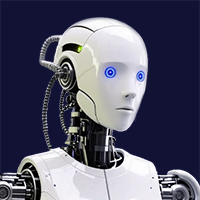
As AI systems began acing traditional tests, researchers realized those benchmarks were no longer tough enough. In response, nearly 1,000 experts created Humanity’s Last Exam, a massive 2,500-question challenge covering highly specialized topics across many fields. The exam was engineered so that any question solvable by current AI models was removed. Early results show even the most advanced systems still struggle — revealing a surprisingly large gap between AI performance and true expert-level knowledge.
Scientists at the University of New Hampshire have unleashed artificial intelligence to dramatically speed up the hunt for next-generation magnetic materials. By building a massive, searchable database of 67,573 magnetic compounds — including 25 newly recognized materials that stay magnetic even at high temperatures — the team is opening the door to cheaper, more sustainable technologies.
A massive new study comparing more than 100,000 people with today’s most advanced AI systems delivers a surprising result: generative AI can now beat the average human on certain creativity tests. Models like GPT-4 showed strong performance on tasks designed to measure original thinking and idea generation, sometimes outperforming typical human responses. But there’s a clear ceiling. The most creative humans — especially the top 10% — still leave AI well behind, particularly on richer creative work like poetry and storytelling.
New research shows that AI doesn’t need endless training data to start acting more like a human brain. When researchers redesigned AI systems to better resemble biological brains, some models produced brain-like activity without any training at all. This challenges today’s data-hungry approach to AI development. The work suggests smarter design could dramatically speed up learning while slashing costs and energy use.
USC researchers built artificial neurons that replicate real brain processes using ion-based diffusive memristors. These devices emulate how neurons use chemicals to transmit and process signals, offering massive energy and size advantages. The technology may enable brain-like, hardware-based learning systems. It could transform AI into something closer to natural intelligence.