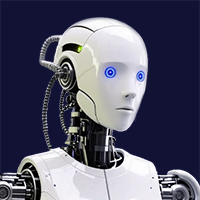
Unitree Robotics, which is believed to be the world’s largest humanoid robot maker, has taken a significant step toward going public, filing for an initial public offering on Shanghai’s STAR Market that could raise up to 4.2 billion yuan ($610 million). The Hangzhou-based company’s IPO application was formally accepted by the Shanghai Stock Exchange on […]
Replacing your brakes is a vital part of vehicle maintenance, but costs vary based on vehicle type, driving habits, and worn components. Many drivers start researching prices after noticing squeaking, grinding, or reduced stopping power. Knowing what affects brake pricing helps you avoid surprises and make smarter decisions. If you’re comparing options for brake repair […]
Choosing the right project management tools can either make or break teams. Choosing among this number of options needs to be done wisely. Good tools assist in organizing tasks, maintaining clear communication, and tracking challenges and progress. Knowing what to look for helps teams make decisions that foster productivity and collaboration. Identify Team Needs Start […]
Robots make work faster, cleaner, and more consistent. They also change how risk shows up on the floor. The danger is not only the moving arm, but also the in-between moments, when a cell is paused, a jam is cleared, or a quick adjustment turns into hands inside the fence. Operators sit closest to these […]
A servo drive converts electrical commands into precise mechanical motion, influencing the speed, position and torque of every motor it powers. This capability makes it one of the most significant components of any production line. When a drive falls short, the effects manifest instantly in positioning errors, lost cycles and unplanned downtime. Five solutions stand […]
Artificial intelligence is often portrayed as a tool that replaces human work, but new research from Swansea University suggests a far more exciting role: creative collaborator. In a large study with more than 800 participants designing virtual cars, researchers found that AI-generated design galleries sparked deeper engagement, longer exploration, and better results.
Humans pay enormous attention to lips during conversation, and robots have struggled badly to keep up. A new robot developed at Columbia Engineering learned realistic lip movements by watching its own reflection and studying human videos online. This allowed it to speak and sing with synchronized facial motion, without being explicitly programmed. Researchers believe this breakthrough could help robots finally cross the uncanny valley.
Researchers have created a prediction method that comes startlingly close to real-world results. It works by aiming for strong alignment with actual values rather than simply reducing mistakes. Tests on medical and health data showed it often outperforms classic approaches. The discovery could reshape how scientists make reliable forecasts.
Vast amounts of valuable research data remain unused, trapped in labs or lost to time. Frontiers aims to change that with FAIR² Data Management, a groundbreaking AI-driven system that makes datasets reusable, verifiable, and citable. By uniting curation, compliance, peer review, and interactive visualization in one platform, FAIR² empowers scientists to share their work responsibly and gain recognition.
A powerful new AI tool called Diag2Diag is revolutionizing fusion research by filling in missing plasma data with synthetic yet highly detailed information. Developed by Princeton scientists and international collaborators, this system uses sensor input to predict readings other diagnostics can’t capture, especially in the crucial plasma edge region where stability determines performance. By reducing reliance on bulky hardware, it promises to make future fusion reactors more compact, affordable, and reliable.
AI-powered analysis of routine blood tests can reveal hidden patterns that predict recovery and survival after spinal cord injuries. This breakthrough could make life-saving predictions affordable and accessible in hospitals worldwide.
Artificial intelligence is consuming enormous amounts of energy, but researchers at the University of Florida have built a chip that could change everything by using light instead of electricity for a core AI function. By etching microscopic lenses directly onto silicon, they’ve enabled laser-powered computations that cut power use dramatically while maintaining near-perfect accuracy.