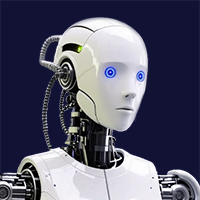
AI is consuming staggering amounts of energy—already over 10% of U.S. electricity—and the demand is only accelerating. Now, researchers have unveiled a radically more efficient approach that could slash AI energy use by up to 100× while actually improving accuracy. By combining neural networks with human-like symbolic reasoning, their system helps robots think more logically instead of relying on brute-force trial and error.
GMEX Robotics, a developer of AI-powered robotic technologies, says it is advancing the development and integration of its “Intelligent Robot Chassis”, which the company describes as “a key innovation designed to enhance the resilience, mobility, and operational safety of autonomous robots across industries”. In connection with this technological advancement, GMEX is in the process of […]
By Michael Santora, CEO at Logic Robotics Cities across the globe are wrestling with a stubborn challenge: congestion. While traffic often comes to mind first, logistics experts point out that the real bottleneck in many urban environments lies at the curb. Trucks not only clog intersections as they navigate narrow streets, but also occupy scarce […]
Researchers at the University of Michigan have created an AI system that can interpret brain MRI scans in just seconds, accurately identifying a wide range of neurological conditions and determining which cases need urgent care. Trained on hundreds of thousands of real-world scans along with patient histories, the model achieved accuracy as high as 97.5% and outperformed other advanced AI tools.
Foams were once thought to behave like glass, with bubbles frozen in place at the microscopic level. But new simulations reveal that foam bubbles are always shifting, even while the foam keeps its overall shape. Remarkably, this restless motion follows the same math used to train artificial intelligence. The finding hints that learning-like behavior may be a fundamental principle shared by materials, machines, and living cells.
Stanford researchers have developed an AI that can predict future disease risk using data from just one night of sleep. The system analyzes detailed physiological signals, looking for hidden patterns across the brain, heart, and breathing. It successfully forecast risks for conditions like cancer, dementia, and heart disease. The results suggest sleep contains early health warnings doctors have largely overlooked.
New research shows that AI doesn’t need endless training data to start acting more like a human brain. When researchers redesigned AI systems to better resemble biological brains, some models produced brain-like activity without any training at all. This challenges today’s data-hungry approach to AI development. The work suggests smarter design could dramatically speed up learning while slashing costs and energy use.
UMass Amherst engineers have built an artificial neuron powered by bacterial protein nanowires that functions like a real one, but at extremely low voltage. This allows for seamless communication with biological cells and drastically improved energy efficiency. The discovery could lead to bio-inspired computers and wearable electronics that no longer need power-hungry amplifiers. Future applications may include sensors powered by sweat or devices that harvest electricity from thin air.