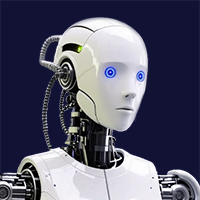
AI is consuming staggering amounts of energy—already over 10% of U.S. electricity—and the demand is only accelerating. Now, researchers have unveiled a radically more efficient approach that could slash AI energy use by up to 100× while actually improving accuracy. By combining neural networks with human-like symbolic reasoning, their system helps robots think more logically instead of relying on brute-force trial and error.
DNA robots are emerging as tiny programmable machines that could one day deliver drugs, hunt viruses, and build molecular-scale devices. By borrowing ideas from traditional robotics and combining them with DNA folding techniques, scientists are creating structures that can move and act with precision. These robots can be guided using chemical reactions or external signals like light and magnetic fields.
As automation becomes central to operations, organizations face growing pressure to demonstrate the value of internal systems like intranets. Reliable measurement of intranet Return On Investment (ROI) requires linking platform performance to automation outcomes and real operational results. With automation scaling rapidly in many sectors, organizations are increasingly scrutinizing the ROI of their intranet investments. […]
By Gary Ng, CEO and co-founder of viAct There is a major shift occurring at some of the most hazardous workplaces on the planet: oil refineries, large construction projects, and underground mines, as new and improving technologies are being used for the initial line of defence. Technologies, like Artificial Intelligence (AI), robotics, and IoT wearables, […]
Deepfake X-rays created by AI are now convincing enough to fool both doctors and AI models. In tests, radiologists had limited success identifying fake images, especially when they didn’t know they were being shown. This opens the door to risks like fraudulent medical claims and tampered diagnoses. Experts say stronger safeguards and detection tools are critical as the technology advances.
As millions turn to ChatGPT and other AI chatbots for therapy-style advice, new research from Brown University raises a serious red flag: even when instructed to act like trained therapists, these systems routinely break core ethical standards of mental health care. In side-by-side evaluations with peer counselors and licensed psychologists, researchers uncovered 15 distinct ethical risks — from mishandling crisis situations and reinforcing harmful beliefs to showing biased responses and offering “deceptive empathy” that mimics care without real understanding.
Dinosaur footprints have always been mysterious, but a new AI app is cracking their secrets. DinoTracker analyzes photos of fossil tracks and predicts which dinosaur made them, with accuracy rivaling human experts. Along the way, it uncovered footprints that look strikingly bird-like—dating back more than 200 million years. That discovery could push the origin of birds much deeper into prehistory.
NASA’s Perseverance rover has just made history by driving across Mars using routes planned by artificial intelligence instead of human operators. A vision-capable AI analyzed the same images and terrain data normally used by rover planners, identified hazards like rocks and sand ripples, and charted a safe path across the Martian surface. After extensive testing in a virtual replica of the rover, Perseverance successfully followed the AI-generated routes, traveling hundreds of feet autonomously.
AI may learn better when it’s allowed to talk to itself. Researchers showed that internal “mumbling,” combined with short-term memory, helps AI adapt to new tasks, switch goals, and handle complex challenges more easily. This approach boosts learning efficiency while using far less training data. It could pave the way for more flexible, human-like AI systems.
A massive new study comparing more than 100,000 people with today’s most advanced AI systems delivers a surprising result: generative AI can now beat the average human on certain creativity tests. Models like GPT-4 showed strong performance on tasks designed to measure original thinking and idea generation, sometimes outperforming typical human responses. But there’s a clear ceiling. The most creative humans — especially the top 10% — still leave AI well behind, particularly on richer creative work like poetry and storytelling.
Scientists have discovered that the human brain understands spoken language in a way that closely resembles how advanced AI language models work. By tracking brain activity as people listened to a long podcast, researchers found that meaning unfolds step by step—much like the layered processing inside systems such as GPT-style models.
Foams were once thought to behave like glass, with bubbles frozen in place at the microscopic level. But new simulations reveal that foam bubbles are always shifting, even while the foam keeps its overall shape. Remarkably, this restless motion follows the same math used to train artificial intelligence. The finding hints that learning-like behavior may be a fundamental principle shared by materials, machines, and living cells.
A generative AI system can now analyze blood cells with greater accuracy and confidence than human experts, detecting subtle signs of diseases like leukemia. It not only spots rare abnormalities but also recognizes its own uncertainty, making it a powerful support tool for clinicians.
Stanford researchers have developed an AI that can predict future disease risk using data from just one night of sleep. The system analyzes detailed physiological signals, looking for hidden patterns across the brain, heart, and breathing. It successfully forecast risks for conditions like cancer, dementia, and heart disease. The results suggest sleep contains early health warnings doctors have largely overlooked.
New research shows that AI doesn’t need endless training data to start acting more like a human brain. When researchers redesigned AI systems to better resemble biological brains, some models produced brain-like activity without any training at all. This challenges today’s data-hungry approach to AI development. The work suggests smarter design could dramatically speed up learning while slashing costs and energy use.
A newly developed AI can predict which diseases specific genetic mutations are likely to cause, not just whether they are harmful. The breakthrough could speed up diagnoses and open new paths for personalized treatment.
Princeton researchers found that the brain excels at learning because it reuses modular “cognitive blocks” across many tasks. Monkeys switching between visual categorization challenges revealed that the prefrontal cortex assembles these blocks like Legos to create new behaviors. This flexibility explains why humans learn quickly while AI models often forget old skills. The insights may help build better AI and new clinical treatments for impaired cognitive adaptability.
Chimps may revise their beliefs in surprisingly human-like ways. Experiments showed they switched choices when presented with stronger clues, demonstrating flexible reasoning. Computational modeling confirmed these decisions weren’t just instinct. The findings could influence how we think about learning in both children and AI.
USC researchers built artificial neurons that replicate real brain processes using ion-based diffusive memristors. These devices emulate how neurons use chemicals to transmit and process signals, offering massive energy and size advantages. The technology may enable brain-like, hardware-based learning systems. It could transform AI into something closer to natural intelligence.
Researchers at the University of Surrey developed an AI that predicts what a person’s knee X-ray will look like in a year, helping track osteoarthritis progression. The tool provides both a visual forecast and a risk score, offering doctors and patients a clearer understanding of the disease. Faster and more interpretable than earlier systems, it could soon expand to predict other conditions like lung or heart disease.