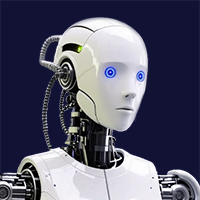
DNA robots are emerging as tiny programmable machines that could one day deliver drugs, hunt viruses, and build molecular-scale devices. By borrowing ideas from traditional robotics and combining them with DNA folding techniques, scientists are creating structures that can move and act with precision. These robots can be guided using chemical reactions or external signals like light and magnetic fields.
Choosing the right method for multimodal AI—systems that combine text, images, and more—has long been trial and error. Emory physicists created a unifying mathematical framework that shows many AI techniques rely on the same core idea: compress data while preserving what’s most predictive. Their “control knob” approach helps researchers design better algorithms, use less data, and avoid wasted computing power. The team believes it could pave the way for more accurate, efficient, and environmentally friendly AI.
A massive new study comparing more than 100,000 people with today’s most advanced AI systems delivers a surprising result: generative AI can now beat the average human on certain creativity tests. Models like GPT-4 showed strong performance on tasks designed to measure original thinking and idea generation, sometimes outperforming typical human responses. But there’s a clear ceiling. The most creative humans — especially the top 10% — still leave AI well behind, particularly on richer creative work like poetry and storytelling.
Artificial intelligence is reshaping law, ethics, and society at a speed that threatens fundamental human dignity. Dr. Maria Randazzo of Charles Darwin University warns that current regulation fails to protect rights such as privacy, autonomy, and anti-discrimination. The “black box problem” leaves people unable to trace or challenge AI decisions that may harm them.