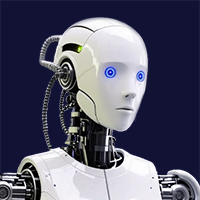
AI is consuming staggering amounts of energy—already over 10% of U.S. electricity—and the demand is only accelerating. Now, researchers have unveiled a radically more efficient approach that could slash AI energy use by up to 100× while actually improving accuracy. By combining neural networks with human-like symbolic reasoning, their system helps robots think more logically instead of relying on brute-force trial and error.
Agile Robots, a leading provider of AI-powered robotic solutions, has successfully acquired assets of thyssenkrupp Automation Engineering in Europe and North America. Through the acquisition, the Munich-based company is strengthening its position in next-generation automation solutions and is tapping into new growth markets and close partnerships with leading OEMs. The acquisition had initially been announced […]
EV adoption is accelerating across logistics, public transport, and energy retail. Charging networks, fleet management systems, energy platforms, and partner APIs all run in parallel but rarely communicate. Dispatchers manually coordinate sessions that should trigger automatically. Energy managers export spreadsheets that a platform should process in real time. At scale, these gaps become a ceiling […]
The humanoid robotics industry may be approaching its first real commercial inflection point – and the signal is not a new product launch or funding round, but a sharp and accelerating decline in prices. Recent disclosures from Unitree Robotics suggest the average price of its humanoid robots fell from approximately $85,000 in 2023 to about […]
Unitree Robotics, which is believed to be the world’s largest humanoid robot maker, has taken a significant step toward going public, filing for an initial public offering on Shanghai’s STAR Market that could raise up to 4.2 billion yuan ($610 million). The Hangzhou-based company’s IPO application was formally accepted by the Shanghai Stock Exchange on […]
Scientists in Japan say they have developed a new approach – dubbed ‘HEAPGrasp’ – that improves robots’ grasping success rate for transparent and shiny objects, beyond reducing handling time, using only RGB camera The fields of manufacturing, logistics, and even restaurants are increasingly moving toward automation, with robots being employed for a wide range of […]
As robotics adoption accelerates across manufacturing, logistics, and infrastructure, energy consumption is emerging as a critical constraint. What was once a secondary engineering consideration is becoming a primary design challenge – shaping how robots are built, deployed, and evaluated. At the same time, sustainability pressures are rising. ESG – environmental, social, and governance – has […]
Agibot, a leading robotics company specializing in embodied intelligence, said it has rolled out its 10,000th humanoid robot, becoming one of the first companies in the industry to reach this milestone at scale. More than a production figure, the achievement marks a significant step forward for the robotics industry, signaling a transition from early-stage validation […]
Deepfake X-rays created by AI are now convincing enough to fool both doctors and AI models. In tests, radiologists had limited success identifying fake images, especially when they didn’t know they were being shown. This opens the door to risks like fraudulent medical claims and tampered diagnoses. Experts say stronger safeguards and detection tools are critical as the technology advances.
Maximo, the solar robotics company incubated by the AES Corporation, has announced the successful installation of 100 megawatts (MW) of utility-scale solar capacity at AES’ Bellefield complex, located on former agricultural land near California City in Kern County. Demand for electricity continues to grow rapidly, driven by data center expansion, electrification and industrial manufacturing. Solar […]
A new tomato-picking robot is learning to think before it acts. Instead of simply identifying ripe fruit, it predicts how easy each tomato will be to harvest and adjusts its approach accordingly. This smarter strategy boosted success rates to 81%, with the robot even switching angles when needed. The breakthrough could pave the way for farms where robots and humans work side by side.
NASA’s Perseverance rover has just made history by driving across Mars using routes planned by artificial intelligence instead of human operators. A vision-capable AI analyzed the same images and terrain data normally used by rover planners, identified hazards like rocks and sand ripples, and charted a safe path across the Martian surface. After extensive testing in a virtual replica of the rover, Perseverance successfully followed the AI-generated routes, traveling hundreds of feet autonomously.
Researchers have turned artificial intelligence into a powerful new lens for understanding why cancer survival rates differ so dramatically around the world. By analyzing cancer data and health system information from 185 countries, the AI model highlights which factors, such as access to radiotherapy, universal health coverage, and economic strength, are most closely linked to better survival in each nation.
Stanford researchers have developed an AI that can predict future disease risk using data from just one night of sleep. The system analyzes detailed physiological signals, looking for hidden patterns across the brain, heart, and breathing. It successfully forecast risks for conditions like cancer, dementia, and heart disease. The results suggest sleep contains early health warnings doctors have largely overlooked.
New findings challenge the widespread belief that AI is an environmental villain. By analyzing U.S. economic data and AI usage across industries, researchers discovered that AI’s energy consumption—while significant locally—barely registers at national or global scales. Even more surprising, AI could help accelerate green technologies rather than hinder them.
A team at the University at Buffalo has made it possible to simulate complex quantum systems without needing a supercomputer. By expanding the truncated Wigner approximation, they’ve created an accessible, efficient way to model real-world quantum behavior. Their method translates dense equations into a ready-to-use format that runs on ordinary computers. It could transform how physicists explore quantum phenomena.
AI-powered analysis of routine blood tests can reveal hidden patterns that predict recovery and survival after spinal cord injuries. This breakthrough could make life-saving predictions affordable and accessible in hospitals worldwide.
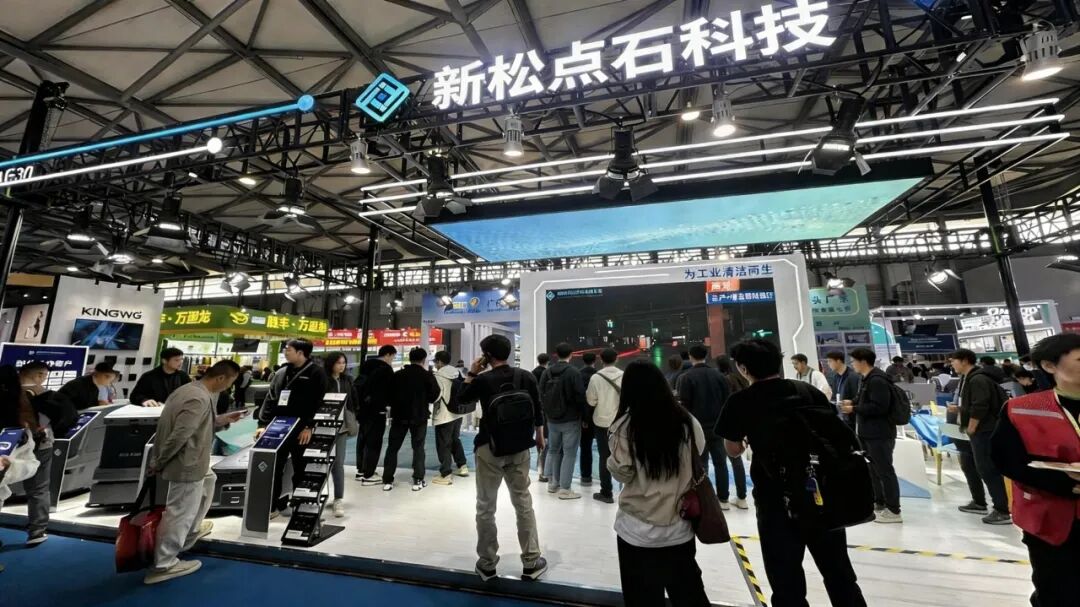
3 月 31 日,第 27 届上海国际清洁技术与设备博览会( CCE )在上海新国际博览中心隆重举行, 新松点石科技 携工业清洁机器人产品及智能清洁系统解决方案亮相此次展会。