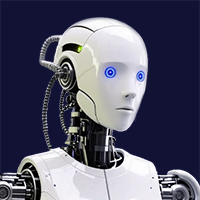
AI is consuming staggering amounts of energy—already over 10% of U.S. electricity—and the demand is only accelerating. Now, researchers have unveiled a radically more efficient approach that could slash AI energy use by up to 100× while actually improving accuracy. By combining neural networks with human-like symbolic reasoning, their system helps robots think more logically instead of relying on brute-force trial and error.
A new tomato-picking robot is learning to think before it acts. Instead of simply identifying ripe fruit, it predicts how easy each tomato will be to harvest and adjusts its approach accordingly. This smarter strategy boosted success rates to 81%, with the robot even switching angles when needed. The breakthrough could pave the way for farms where robots and humans work side by side.
Scientists at the University of New Hampshire have unleashed artificial intelligence to dramatically speed up the hunt for next-generation magnetic materials. By building a massive, searchable database of 67,573 magnetic compounds — including 25 newly recognized materials that stay magnetic even at high temperatures — the team is opening the door to cheaper, more sustainable technologies.
Neuromorphic computers modeled after the human brain can now solve the complex equations behind physics simulations — something once thought possible only with energy-hungry supercomputers. The breakthrough could lead to powerful, low-energy supercomputers while revealing new secrets about how our brains process information.
Humans pay enormous attention to lips during conversation, and robots have struggled badly to keep up. A new robot developed at Columbia Engineering learned realistic lip movements by watching its own reflection and studying human videos online. This allowed it to speak and sing with synchronized facial motion, without being explicitly programmed. Researchers believe this breakthrough could help robots finally cross the uncanny valley.
Researchers have created microscopic robots so small they’re barely visible, yet smart enough to sense, decide, and move completely on their own. Powered by light and equipped with tiny computers, the robots swim by manipulating electric fields rather than using moving parts. They can detect temperature changes, follow programmed paths, and even work together in groups. The breakthrough marks the first truly autonomous robots at this microscopic scale.
A newly developed AI can predict which diseases specific genetic mutations are likely to cause, not just whether they are harmful. The breakthrough could speed up diagnoses and open new paths for personalized treatment.
Researchers have created a prediction method that comes startlingly close to real-world results. It works by aiming for strong alignment with actual values rather than simply reducing mistakes. Tests on medical and health data showed it often outperforms classic approaches. The discovery could reshape how scientists make reliable forecasts.
Researchers at Tsinghua University developed the Optical Feature Extraction Engine (OFE2), an optical engine that processes data at 12.5 GHz using light rather than electricity. Its integrated diffraction and data preparation modules enable unprecedented speed and efficiency for AI tasks. Demonstrations in imaging and trading showed improved accuracy, lower latency, and reduced power demand. This innovation pushes optical computing toward real-world, high-performance AI.
HydroSpread, a breakthrough fabrication method, lets scientists build ultrathin soft robots directly on water. These tiny, insect-inspired machines could transform robotics, healthcare, and environmental monitoring.
AI-powered analysis of routine blood tests can reveal hidden patterns that predict recovery and survival after spinal cord injuries. This breakthrough could make life-saving predictions affordable and accessible in hospitals worldwide.
Using laser light instead of traditional mechanics, researchers have built micro-gears that can spin, shift direction, and even power tiny machines. These breakthroughs could soon lead to revolutionary medical tools working at the scale of cells.