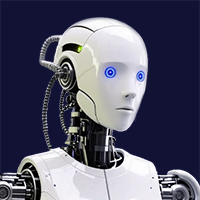
By the time you finish reading this sentence, another humanoid robot will have rolled off a production line somewhere in China. That is not hyperbole. On March 30, 2026, Shanghai-based Agibot announced it had produced its 10,000th humanoid robot – a milestone the company reached after scaling from 5,000 to 10,000 units in just three […]
Replacing your brakes is a vital part of vehicle maintenance, but costs vary based on vehicle type, driving habits, and worn components. Many drivers start researching prices after noticing squeaking, grinding, or reduced stopping power. Knowing what affects brake pricing helps you avoid surprises and make smarter decisions. If you’re comparing options for brake repair […]
Neuromorphic computers modeled after the human brain can now solve the complex equations behind physics simulations — something once thought possible only with energy-hungry supercomputers. The breakthrough could lead to powerful, low-energy supercomputers while revealing new secrets about how our brains process information.
NASA’s Perseverance rover has just made history by driving across Mars using routes planned by artificial intelligence instead of human operators. A vision-capable AI analyzed the same images and terrain data normally used by rover planners, identified hazards like rocks and sand ripples, and charted a safe path across the Martian surface. After extensive testing in a virtual replica of the rover, Perseverance successfully followed the AI-generated routes, traveling hundreds of feet autonomously.
New research shows that AI doesn’t need endless training data to start acting more like a human brain. When researchers redesigned AI systems to better resemble biological brains, some models produced brain-like activity without any training at all. This challenges today’s data-hungry approach to AI development. The work suggests smarter design could dramatically speed up learning while slashing costs and energy use.
Researchers combined deep learning with high-resolution physics to create the first Milky Way model that tracks over 100 billion stars individually. Their AI learned how gas behaves after supernovae, removing one of the biggest computational bottlenecks in galactic modeling. The result is a simulation hundreds of times faster than current methods.
AI-powered analysis of routine blood tests can reveal hidden patterns that predict recovery and survival after spinal cord injuries. This breakthrough could make life-saving predictions affordable and accessible in hospitals worldwide.