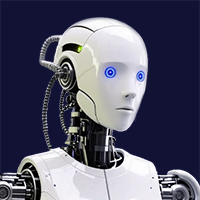
Humans pay enormous attention to lips during conversation, and robots have struggled badly to keep up. A new robot developed at Columbia Engineering learned realistic lip movements by watching its own reflection and studying human videos online. This allowed it to speak and sing with synchronized facial motion, without being explicitly programmed. Researchers believe this breakthrough could help robots finally cross the uncanny valley.
Foams were once thought to behave like glass, with bubbles frozen in place at the microscopic level. But new simulations reveal that foam bubbles are always shifting, even while the foam keeps its overall shape. Remarkably, this restless motion follows the same math used to train artificial intelligence. The finding hints that learning-like behavior may be a fundamental principle shared by materials, machines, and living cells.
Researchers have created microscopic robots so small they’re barely visible, yet smart enough to sense, decide, and move completely on their own. Powered by light and equipped with tiny computers, the robots swim by manipulating electric fields rather than using moving parts. They can detect temperature changes, follow programmed paths, and even work together in groups. The breakthrough marks the first truly autonomous robots at this microscopic scale.
New research shows that AI doesn’t need endless training data to start acting more like a human brain. When researchers redesigned AI systems to better resemble biological brains, some models produced brain-like activity without any training at all. This challenges today’s data-hungry approach to AI development. The work suggests smarter design could dramatically speed up learning while slashing costs and energy use.
Spanish researchers have created a powerful new open-source tool that helps uncover the hidden genetic networks driving cancer. Called RNACOREX, the software can analyze thousands of molecular interactions at once, revealing how genes communicate inside tumors and how those signals relate to patient survival. Tested across 13 different cancer types using international data, the tool matches the predictive power of advanced AI systems—while offering something rare in modern analytics: clear, interpretable explanations that help scientists understand why tumors behave the way they do.
Researchers used a deep learning AI model to uncover the first imaging-based biomarker of chronic stress by measuring adrenal gland volume on routine CT scans. This new metric, the Adrenal Volume Index, correlates strongly with cortisol levels, allostatic load, perceived stress, and even long-term cardiovascular outcomes, including heart failure risk.
BISC is an ultra-thin neural implant that creates a high-bandwidth wireless link between the brain and computers. Its tiny single-chip design packs tens of thousands of electrodes and supports advanced AI models for decoding movement, perception, and intent. Initial clinical work shows it can be inserted through a small opening in the skull and remain stable while capturing detailed neural activity. The technology could reshape treatments for epilepsy, paralysis, and blindness.
New findings challenge the widespread belief that AI is an environmental villain. By analyzing U.S. economic data and AI usage across industries, researchers discovered that AI’s energy consumption—while significant locally—barely registers at national or global scales. Even more surprising, AI could help accelerate green technologies rather than hinder them.
Princeton researchers found that the brain excels at learning because it reuses modular “cognitive blocks” across many tasks. Monkeys switching between visual categorization challenges revealed that the prefrontal cortex assembles these blocks like Legos to create new behaviors. This flexibility explains why humans learn quickly while AI models often forget old skills. The insights may help build better AI and new clinical treatments for impaired cognitive adaptability.
Researchers combined deep learning with high-resolution physics to create the first Milky Way model that tracks over 100 billion stars individually. Their AI learned how gas behaves after supernovae, removing one of the biggest computational bottlenecks in galactic modeling. The result is a simulation hundreds of times faster than current methods.
Aalto University researchers have developed a method to execute AI tensor operations using just one pass of light. By encoding data directly into light waves, they enable calculations to occur naturally and simultaneously. The approach works passively, without electronics, and could soon be integrated into photonic chips. If adopted, it promises dramatically faster and more energy-efficient AI systems.
A wireless eye implant developed at Stanford Medicine has restored reading ability to people with advanced macular degeneration. The PRIMA chip works with smart glasses to replace lost photoreceptors using infrared light. Most trial participants regained functional vision, reading books and recognizing signs. Researchers are now developing higher-resolution versions that could eventually provide near-normal sight.
UMass Amherst engineers have built an artificial neuron powered by bacterial protein nanowires that functions like a real one, but at extremely low voltage. This allows for seamless communication with biological cells and drastically improved energy efficiency. The discovery could lead to bio-inspired computers and wearable electronics that no longer need power-hungry amplifiers. Future applications may include sensors powered by sweat or devices that harvest electricity from thin air.
A team of engineers at North Carolina State University has designed a polymer “Chinese lantern” that can rapidly snap into multiple stable 3D shapes—including a lantern, a spinning top, and more—by compression or twisting. By adding a magnetic layer, they achieved remote control of the shape-shifting process, allowing the lanterns to act as grippers, filters, or expandable mechanisms.
Scientists at Skoltech developed a new mathematical model of memory that explores how information is encoded and stored. Their analysis suggests that memory works best in a seven-dimensional conceptual space — equivalent to having seven senses. The finding implies that both humans and AI might benefit from broader sensory inputs to optimize learning and recall.
Researchers at Columbia have created a chip that turns a single laser into a “frequency comb,” producing dozens of powerful light channels at once. Using a special locking mechanism to clean messy laser light, the team achieved lab-grade precision on a small silicon device. This could drastically improve data center efficiency and fuel innovations in sensing, quantum tech, and LiDAR.
HydroSpread, a breakthrough fabrication method, lets scientists build ultrathin soft robots directly on water. These tiny, insect-inspired machines could transform robotics, healthcare, and environmental monitoring.
A new AI tool called DOLPHIN exposes hidden genetic markers inside single cells, enabling earlier detection and more precise treatment choices. It also sets the stage for building virtual models of cells to simulate disease and drug responses.
A powerful new AI tool called Diag2Diag is revolutionizing fusion research by filling in missing plasma data with synthetic yet highly detailed information. Developed by Princeton scientists and international collaborators, this system uses sensor input to predict readings other diagnostics can’t capture, especially in the crucial plasma edge region where stability determines performance. By reducing reliance on bulky hardware, it promises to make future fusion reactors more compact, affordable, and reliable.
Using laser light instead of traditional mechanics, researchers have built micro-gears that can spin, shift direction, and even power tiny machines. These breakthroughs could soon lead to revolutionary medical tools working at the scale of cells.