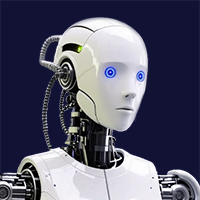
A philosopher at the University of Cambridge says there’s no reliable way to know whether AI is conscious—and that may remain true for the foreseeable future. According to Dr. Tom McClelland, consciousness alone isn’t the ethical tipping point anyway; sentience, the capacity to feel good or bad, is what truly matters. He argues that claims of conscious AI are often more marketing than science, and that believing in machine minds too easily could cause real harm. The safest stance for now, he says, is honest uncertainty.
A new AI developed at Duke University can uncover simple, readable rules behind extremely complex systems. It studies how systems evolve over time and reduces thousands of variables into compact equations that still capture real behavior. The method works across physics, engineering, climate science, and biology. Researchers say it could help scientists understand systems where traditional equations are missing or too complicated to write down.
BISC is an ultra-thin neural implant that creates a high-bandwidth wireless link between the brain and computers. Its tiny single-chip design packs tens of thousands of electrodes and supports advanced AI models for decoding movement, perception, and intent. Initial clinical work shows it can be inserted through a small opening in the skull and remain stable while capturing detailed neural activity. The technology could reshape treatments for epilepsy, paralysis, and blindness.
Researchers have created a prediction method that comes startlingly close to real-world results. It works by aiming for strong alignment with actual values rather than simply reducing mistakes. Tests on medical and health data showed it often outperforms classic approaches. The discovery could reshape how scientists make reliable forecasts.
USC researchers built artificial neurons that replicate real brain processes using ion-based diffusive memristors. These devices emulate how neurons use chemicals to transmit and process signals, offering massive energy and size advantages. The technology may enable brain-like, hardware-based learning systems. It could transform AI into something closer to natural intelligence.
Researchers at Tsinghua University developed the Optical Feature Extraction Engine (OFE2), an optical engine that processes data at 12.5 GHz using light rather than electricity. Its integrated diffraction and data preparation modules enable unprecedented speed and efficiency for AI tasks. Demonstrations in imaging and trading showed improved accuracy, lower latency, and reduced power demand. This innovation pushes optical computing toward real-world, high-performance AI.
UMass Amherst engineers have built an artificial neuron powered by bacterial protein nanowires that functions like a real one, but at extremely low voltage. This allows for seamless communication with biological cells and drastically improved energy efficiency. The discovery could lead to bio-inspired computers and wearable electronics that no longer need power-hungry amplifiers. Future applications may include sensors powered by sweat or devices that harvest electricity from thin air.
A team at the University at Buffalo has made it possible to simulate complex quantum systems without needing a supercomputer. By expanding the truncated Wigner approximation, they’ve created an accessible, efficient way to model real-world quantum behavior. Their method translates dense equations into a ready-to-use format that runs on ordinary computers. It could transform how physicists explore quantum phenomena.
Scientists at Mount Sinai have created an artificial intelligence system that can predict how likely rare genetic mutations are to actually cause disease. By combining machine learning with millions of electronic health records and routine lab tests like cholesterol or kidney function, the system produces "ML penetrance" scores that place genetic risk on a spectrum rather than a simple yes/no. Some variants once thought dangerous showed little real-world impact, while others previously labeled uncertain revealed strong disease links.