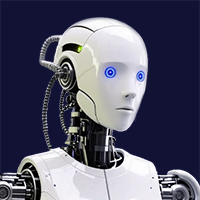
A philosopher at the University of Cambridge says there’s no reliable way to know whether AI is conscious—and that may remain true for the foreseeable future. According to Dr. Tom McClelland, consciousness alone isn’t the ethical tipping point anyway; sentience, the capacity to feel good or bad, is what truly matters. He argues that claims of conscious AI are often more marketing than science, and that believing in machine minds too easily could cause real harm. The safest stance for now, he says, is honest uncertainty.
AI tools designed to diagnose cancer from tissue samples are quietly learning more than just disease patterns. New research shows these systems can infer patient demographics from pathology slides, leading to biased results for certain groups. The bias stems from how the models are trained and the data they see, not just from missing samples. Researchers also demonstrated a way to significantly reduce these disparities.
New findings challenge the widespread belief that AI is an environmental villain. By analyzing U.S. economic data and AI usage across industries, researchers discovered that AI’s energy consumption—while significant locally—barely registers at national or global scales. Even more surprising, AI could help accelerate green technologies rather than hinder them.
Aalto University researchers have developed a method to execute AI tensor operations using just one pass of light. By encoding data directly into light waves, they enable calculations to occur naturally and simultaneously. The approach works passively, without electronics, and could soon be integrated into photonic chips. If adopted, it promises dramatically faster and more energy-efficient AI systems.
Researchers at the University of Surrey developed an AI that predicts what a person’s knee X-ray will look like in a year, helping track osteoarthritis progression. The tool provides both a visual forecast and a risk score, offering doctors and patients a clearer understanding of the disease. Faster and more interpretable than earlier systems, it could soon expand to predict other conditions like lung or heart disease.
A team of engineers at North Carolina State University has designed a polymer “Chinese lantern” that can rapidly snap into multiple stable 3D shapes—including a lantern, a spinning top, and more—by compression or twisting. By adding a magnetic layer, they achieved remote control of the shape-shifting process, allowing the lanterns to act as grippers, filters, or expandable mechanisms.
A new AI tool called DOLPHIN exposes hidden genetic markers inside single cells, enabling earlier detection and more precise treatment choices. It also sets the stage for building virtual models of cells to simulate disease and drug responses.
A powerful new AI tool called Diag2Diag is revolutionizing fusion research by filling in missing plasma data with synthetic yet highly detailed information. Developed by Princeton scientists and international collaborators, this system uses sensor input to predict readings other diagnostics can’t capture, especially in the crucial plasma edge region where stability determines performance. By reducing reliance on bulky hardware, it promises to make future fusion reactors more compact, affordable, and reliable.
Artificial intelligence is consuming enormous amounts of energy, but researchers at the University of Florida have built a chip that could change everything by using light instead of electricity for a core AI function. By etching microscopic lenses directly onto silicon, they’ve enabled laser-powered computations that cut power use dramatically while maintaining near-perfect accuracy.