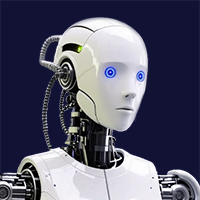
Humans pay enormous attention to lips during conversation, and robots have struggled badly to keep up. A new robot developed at Columbia Engineering learned realistic lip movements by watching its own reflection and studying human videos online. This allowed it to speak and sing with synchronized facial motion, without being explicitly programmed. Researchers believe this breakthrough could help robots finally cross the uncanny valley.
A generative AI system can now analyze blood cells with greater accuracy and confidence than human experts, detecting subtle signs of diseases like leukemia. It not only spots rare abnormalities but also recognizes its own uncertainty, making it a powerful support tool for clinicians.
New research shows that AI doesn’t need endless training data to start acting more like a human brain. When researchers redesigned AI systems to better resemble biological brains, some models produced brain-like activity without any training at all. This challenges today’s data-hungry approach to AI development. The work suggests smarter design could dramatically speed up learning while slashing costs and energy use.
A new AI developed at Duke University can uncover simple, readable rules behind extremely complex systems. It studies how systems evolve over time and reduces thousands of variables into compact equations that still capture real behavior. The method works across physics, engineering, climate science, and biology. Researchers say it could help scientists understand systems where traditional equations are missing or too complicated to write down.
Princeton researchers found that the brain excels at learning because it reuses modular “cognitive blocks” across many tasks. Monkeys switching between visual categorization challenges revealed that the prefrontal cortex assembles these blocks like Legos to create new behaviors. This flexibility explains why humans learn quickly while AI models often forget old skills. The insights may help build better AI and new clinical treatments for impaired cognitive adaptability.
Chimps may revise their beliefs in surprisingly human-like ways. Experiments showed they switched choices when presented with stronger clues, demonstrating flexible reasoning. Computational modeling confirmed these decisions weren’t just instinct. The findings could influence how we think about learning in both children and AI.
Scientists at Skoltech developed a new mathematical model of memory that explores how information is encoded and stored. Their analysis suggests that memory works best in a seven-dimensional conceptual space — equivalent to having seven senses. The finding implies that both humans and AI might benefit from broader sensory inputs to optimize learning and recall.
Using laser light instead of traditional mechanics, researchers have built micro-gears that can spin, shift direction, and even power tiny machines. These breakthroughs could soon lead to revolutionary medical tools working at the scale of cells.
Artificial intelligence is reshaping law, ethics, and society at a speed that threatens fundamental human dignity. Dr. Maria Randazzo of Charles Darwin University warns that current regulation fails to protect rights such as privacy, autonomy, and anti-discrimination. The “black box problem” leaves people unable to trace or challenge AI decisions that may harm them.

全球高性能四足机器人行业开创者,全球四足机器人行业应用的领航者。

当地时间2023年8月31日中午,在韩国釜山举行的第32届IEEE人机交互国际会议(32nd IEEE International Conference on Robot and Human Interactive Communication) 颁奖典礼上,大会指导和顾问委员会宣布:2024年第33届IEEE人机交互国际会议(IEEE RO-MAN 2024)将在美国洛杉矶地区的帕萨迪纳市举办,由IET会士、IEEE机器人学会青年科学家奖获得者、优必选科技联席首席技术官谭欢博士担任大会总主席,优必选科技将深度参与主办此届大会。